

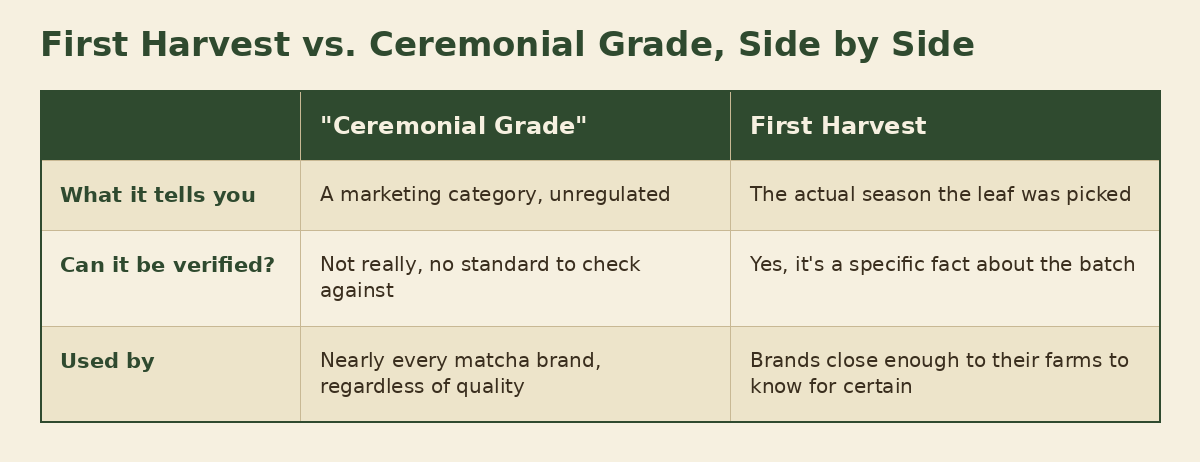
If you've spent any time shopping for matcha online, you've seen "ceremonial grade" on almost every tin (ours included), until now. It's meant to signal the good stuff. The problem is, it's not a regulated term. There's no board, no certification, no minimum standard anyone has to meet to put those words on a label. A $12 supermarket tin and a $50 single-origin tin can both call themselves "ceremonial grade," and neither one is breaking any rules… though one might leave a sour taste in your mouth.
So we've moved away from using this term. Not because of any changes to our matcha but because we'd rather tell you the specific, checkable thing that actually matters: when the leaf was picked.
What "Ceremonial Grade" Was Supposed to Mean
Originally, the term pointed to matcha good enough to be whisked on its own and served in a traditional tea ceremony. Young, shade-grown leaves, stone-milled, no bitterness to hide behind milk or sugar. This was commonly used as a meaningful distinction from culinary-grade matcha, which is made from older, more mature leaves better suited to baking or blending than sipping due to the properties of the flavour as well as cost.
The trouble is what's happened to the label since. Because there's no standard behind it, "ceremonial grade" has become something brands print on a tin rather than something a tin has to earn. It tells you almost nothing about which farm, which harvest, or which leaves you're actually getting.
What "First Harvest" Actually Tells You
First harvest is the specific, verifiable thing "ceremonial grade" was always trying to gesture at. It refers to the tea plant's first flush of the season which are the youngest, most tender leaves, harvested in spring after weeks of shade-growing. This is when the plant's chlorophyll, L-theanine, and natural sweetness are at their peak, and it's why first-harvest matcha tends to taste smoother and less bitter than matcha picked later in the year.
Unlike a grade label, first harvest is a fact about a specific batch of tea rather than a marketing category. A farm either picked it in the spring flush, or they didn't.
Why We Talk About Harvest, Not Grade
We work directly with five family-run farms across Japan - no wholesalers in between. That means we know exactly when each batch was picked, because we're the ones asking the farm, not reading it off a wholesaler's spec sheet. First harvest is something we can actually stand behind, batch by batch. "Ceremonial grade" is something we'd be asking you to take on faith.
This is the same reason we'd rather tell you a cultivar is Gokou, Saemidori, or Okumidori than just call it "premium". Specifics can be checked, quality labels can't.
A Quick Way to Judge Matcha Yourself
You don't need to take any brand's word for it — including ours. A few things worth checking before you buy:
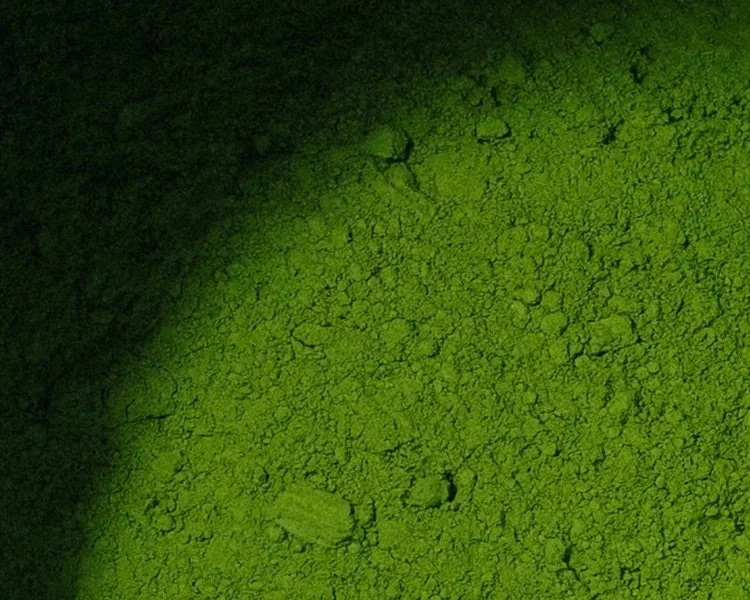
Colour: a vibrant, jade green suggests good chlorophyll and proper shade-growing. Dull or yellowish tones usually mean older leaves or poor handling.
Aroma: fresh and gently grassy, with a hint of sweetness. A flat, stale, fishy or "green tea bag" smell is a sign the leaf isn't fresh.
Origin: ask which region, and ideally which farm. "Japanese matcha" alone doesn't tell you much; Uji, Wazuka, and Kagoshima, for instance, are genuinely different growing regions with their own climate, soil and conditions which contribute to overall character.
Harvest timing: ask when it was picked, and whether it's first harvest or a later flush. A brand that can answer this specifically is usually a brand that's close to its own supply chain.
Ready to taste the difference for yourself? Shop our first-harvest matcha range